

Types of Hinges for uPVC Doors
Hinges may be the cause of dangling or falling uPVC doors. It is possible that you need to change or adjust the hinges of your uPVC door in order for it to operate smoothly.
Hinges are made up of flat hinge leaves (or plates) along with knuckles, a hinge pin, and an hinge pin. They allow for the adjustment of lateral or compression.
Butt Hinges
When it comes to hinges, there are countless sizes and types available. Each has its own unique attributes to suit different requirements for installation. Butt hinges are a very useful kind of hardware that offers strength and durability for doors. They are also available in a wide variety of styles and finishes to suit the look of the door or installation area. There are even specialty hinges designed to meet the needs of specific customers such as pivoting hinges, or fully concealed barrel hinges.
A butt hinge consists of two leaves, three or more pins, knuckles, and a barrel with a curving. The knuckle, or barrel, is the hinge's pivot point, and is normally connected to the leafs with fasteners such as screws.
Butt hinges are able to hold heavier loads than other hinges. This is due to their bigger knuckle is more supportive of leafs. Butt hinges are more resistant to extreme temperatures as they are more able for expansion and contraction.
Butt hinges can also be installed on recessed surfaces. This means that they aren't visible when the door is open or closed. This gives a smoother appearance and a more refined aesthetic. However, they may require routing to achieve an even finish.
Butt hinges have their own disadvantages. For example, the amount of friction they create can wear down the hinge over time. It is recommended that hinges be cleaned and lubricated regularly to minimize the chance of this. This will prevent friction from wearing the knuckles down and will ensure that they are working efficiently.
Some butt hinges decrease friction by putting a ball bearing in between the knuckles. They are great for doors that see a lot of use. They also come with a pin fixed that is perfect for doors that are secure and cannot be opened with the removal of the pin.
Other types of hinges include a plain bearing lubricated with grease, which reduces friction and allows the hinge to be moved with the least amount of force. upvc door hinge replacement chelmsford Repair My Windows And Doors are recommended for lighter uses, including cabinet doors. They are also available with spun ends to ensure the pin is permanently fixed in the correct position.
Butt hinges can be found in both residential and commercial settings. For instance, they are used in medical and research establishments to shield patients from radiation and neutron contamination and also for vault doors and security systems. They are also crucial in the defense and military sector, where they are used to secure transporters and armored vehicles. They are typically constructed of brass or stainless steel to increase durability and resistance to corrosion.
Flag Hinges
A hinge is a type of mechanical component that connects two parts and allows them to move around a fixed location. Hinges are typically made of metal, and they come in various designs, sizes and capacities of weight for various applications. They are found on a wide range of items including doors, enclosures and lids and are available in many styles to fit the design of the application. There are various kinds of hinges commonly used in doors and uPVC windows. These include butt, flag, and continuous hinges.
Butt hinges are commonly used to support the sash of a door and provide the necessary stability to ensure smooth operation and longevity. They are designed to sit between the frame of the door and sash, creating a clean, unobtrusive appearance when closed. They permit the door to open and close smoothly around the pin that connects the two hinge parts. They also help distribute the weight of the sash evenly throughout the time to provide more efficient performance.
Similar to other hinges Butt hinges are also available in a variety of sizes and load-bearing capacities to fit different door sizes and weights. The kind of hinge that is selected will depend on the use and the desired level of durability and performance. The capacity to bear load of a hinge is based on the amount of force applied to the hinge and the amount of time it is exposed to that pressure. For applications that require a lot of force an extra-strong hinge will be required.
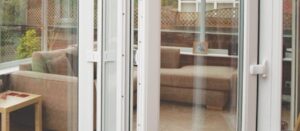
Flag hinges are an extremely popular type of hinge for doors. They can be used for a variety of purposes and sizes. They are smaller and lighter in comparison to other hinges. This makes them perfect for doors that are lightweight. They are also highly robust and can stand up to a considerable amount of force, making them an ideal choice for use in high-traffic areas.
To fit the flag hinge, the first step is to mark the locations of the pin-locating holes and screw holes on the door sash and on the hinge body. The holes are then pre-drilled using the fixing jig then screw the hinge to the sash until it is in line with the profile. Make sure that the screws that are furthest from the hinge body are secured to steel reinforcing and plastic rather than the wood of the sash to prevent damage to the sash and the frame. Next, slot the hinge body pin into each of the holes for locating on the plate and secure it using the corresponding screw.
For the majority of applications that require a standard uPVC will require x3 hinges. The top flag hinge should be placed 150mm above the top edge, and the bottom, middle and outer hinges should be placed evenly between them. To check the correct position of the hinges, a sash of a door should be shut and raised to its maximum height, and you should be able to see the hinges at their full length when fully raised. If not, the hinges may be too separated. The door won't be able to operate smoothly or safely.